
Observe the colony from Foxy Beach
The Boulders Beach penguins are African penguins, with the scientific name Spheniscus demersus. The colony's viewing area at Foxy Beach has wooden boardwalks that let visitors observe the birds while keeping to a defined route.
Plan admission and your arrival together. A penguin-focused excursion from Cape Town can provide transport, while an independently arranged visit gives you your own travel plan. Neither creates a guarantee of a particular wildlife scene.
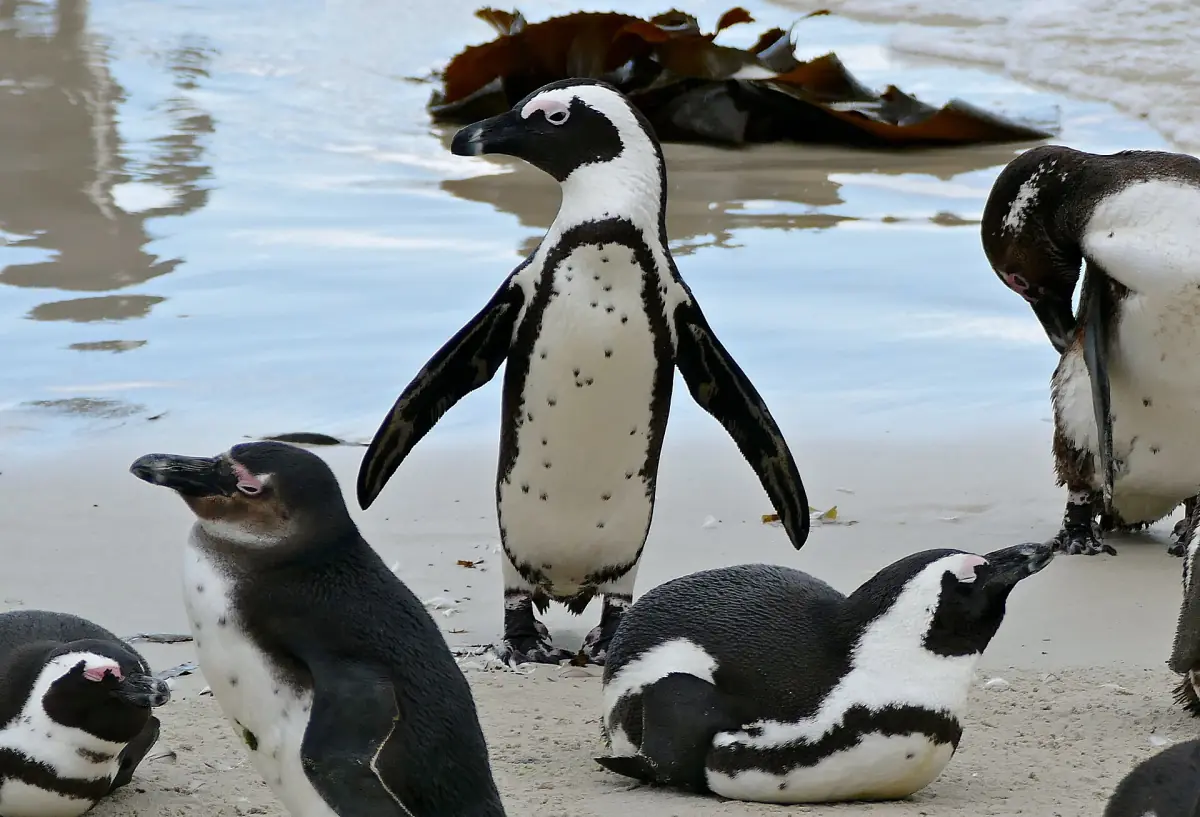
Give the birds room to move
Stay on the designated paths in the observation area. Do not touch or feed the penguins, and avoid nest sites. A bird that feels crowded can bite. If birds are using the space in front of you, step back and let them pass rather than closing in for a photograph.
Penguins may be on the beach, near vegetation or in the water. Treat the viewing space as a wildlife habitat rather than a place for staged contact. A bathing visit and a colony observation visit are separate plans; the presence of a penguin in the sea does not make approaching it appropriate.
A shorter organised penguin visit
This small-group trip connects your Cape Town accommodation with the colony; add the entry ticket separately.
Hand-picked tours, booked through GetYourGuide. Prices are indicative starting prices in US dollars (as of October 2026). Tap a tour for live availability and the current price in your currency.
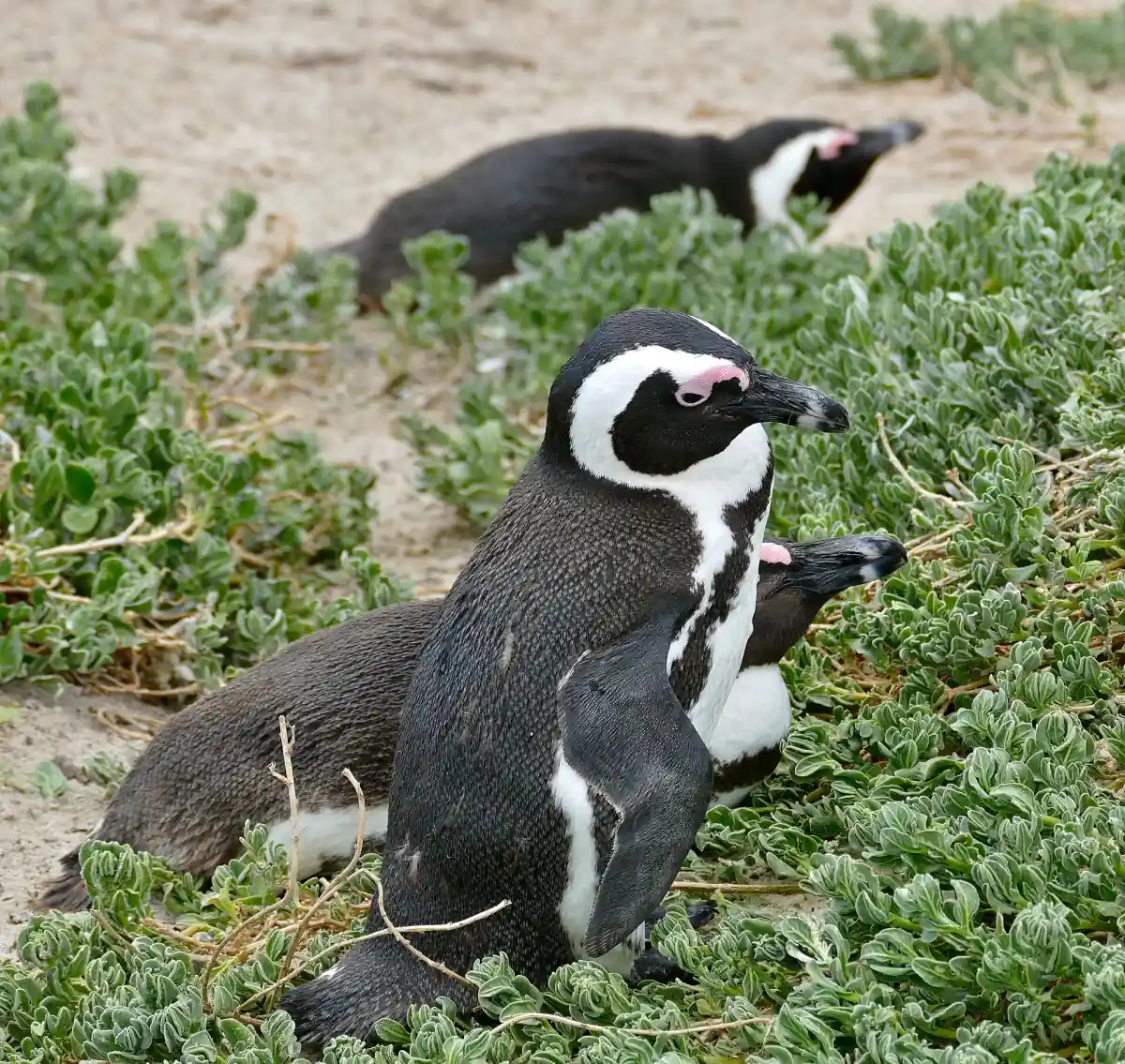
Visits to the Boulders penguin colony
Choose transport and a planned colony stop while leaving the birds their space and keeping wildlife expectations flexible.
Photograph without disturbing
Use your camera's framing from the permitted viewing position. Do not put selfie sticks through fences or reach towards a bird to improve the angle. Leave nesting areas undisturbed and take a wider view when the boardwalk position does not allow the close composition you had imagined.
For photographs, distinguish a guided visit from a specialised wildlife session. A peninsula round trip with photography help still has a scheduled route and ordinary entry arrangements; it does not provide exclusive access to the colony.
Seasonal behaviour is not a viewing guarantee
Breeding and moulting change how birds use the colony, but a month is not a promise of chicks or a fixed number of penguins at a viewpoint. Choose the visit period around your wider trip, and use the regional climate guide for packing rather than treating a wildlife calendar as a booking guarantee.
A critically endangered species
SANParks' June 2026 colony update describes the African penguin as critically endangered. Responsible viewing means more than taking a photograph: keep feeding, movement and nesting spaces clear and follow staff instructions. Historical colony counts and breeding-pair totals are not an exact count of birds you will see on the day.
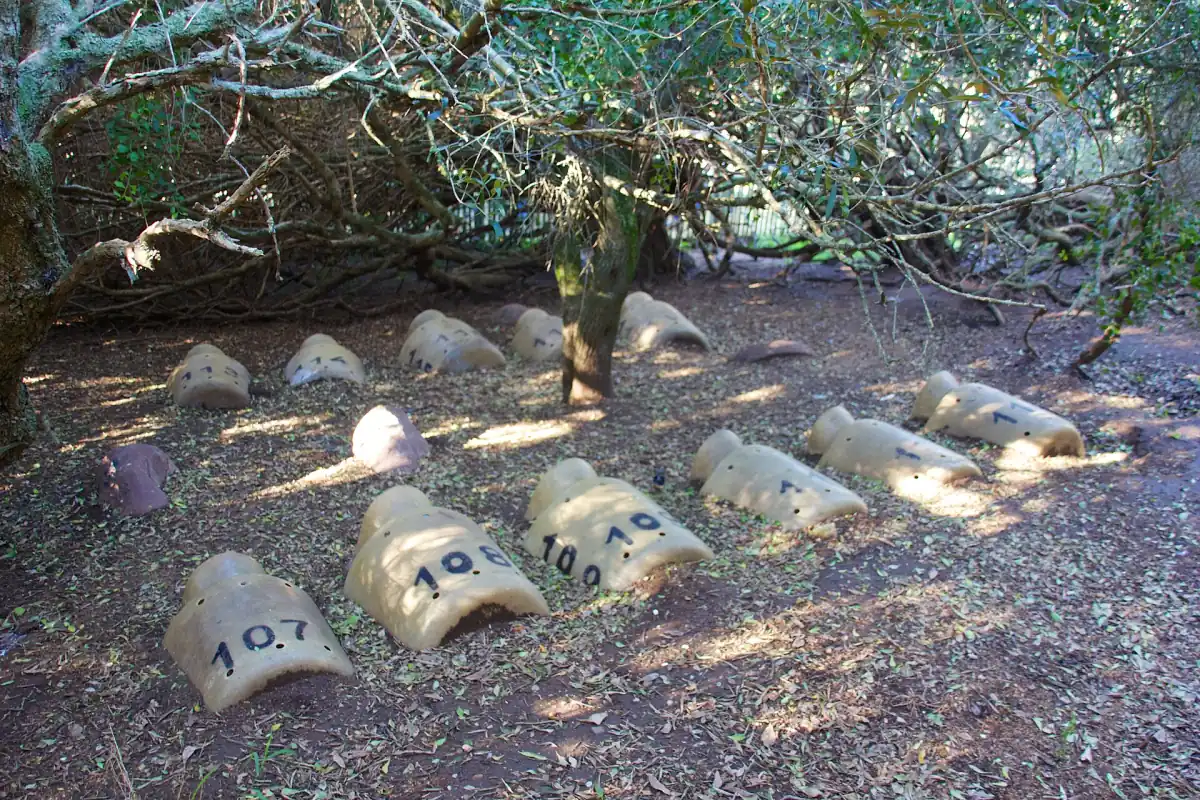
The nesting shelters shown here form part of the colony landscape. Observe them from the visitor route instead of trying to look inside a nest.
Make your visit work for wildlife viewing
- Choose a colony-viewing visit if observing the birds is your priority. Do not substitute a general coastal photo stop for entry to the designated visitor area.
- Compare your transport arrangements with the stop described in the itinerary. A full peninsula circuit and a penguin-focused outing make different use of the day.
- At the colony, follow the viewing route and give birds space to pass without changing their direction.
- Take photographs from where visitors are permitted to stand. If a nest or bird is partly hidden, keep that position rather than reaching over a barrier.
- Treat bathing as a separate decision, including its access and tide conditions, rather than an extension of a close wildlife encounter.
This approach also helps when travelling with others who have different priorities. Someone interested mainly in the birds may prefer to concentrate on the boardwalk, while someone hoping for a beach break needs a plan for that separate area. Agree those priorities before choosing an excursion whose itinerary allows only a brief colony stop.
For the visit itself, the useful outcome is observing behaviour without affecting it. A wide photograph showing birds in their coastal setting can record the experience without requiring a close approach.
Penguin viewing questions
Can I touch or feed a penguin?
No. Keep to the visitor route and let the birds move without interference. Crowded or disturbed birds can bite.
Will I definitely see chicks?
No. A travel month does not guarantee a particular breeding stage or a chick at your viewpoint.
Can I go swimming with them?
A visit to the bathing beach does not guarantee birds in the water and does not permit touching or approaching wildlife.